We Stay Up at Night with Worry: The Psychological Toll of Vulnerability
Date: March 11, 2026
The field research engaged with several communities that discussed deteriorating psychological and emotional health, as a result of prolonged neglect, lack of agency, high levels of frustration, or trauma from loss. This is an underreported phenomenon, but its prevalence is high all across Pakistan, notably within cohorts like persons with disabilities, transgender persons, youth without gainful employment or agency, housewives, women engaged in informal labour, refugees and climate-affected communities.
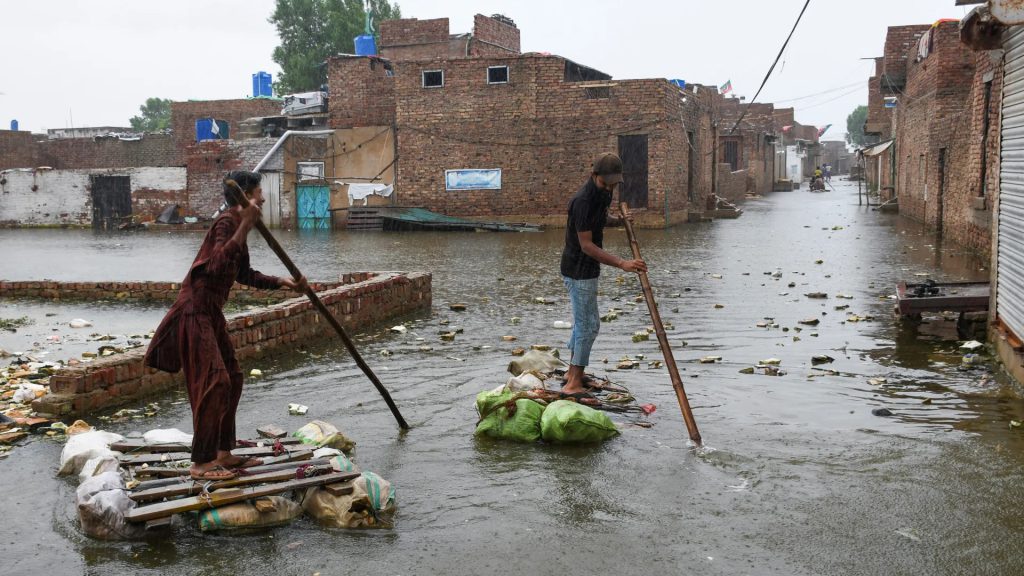
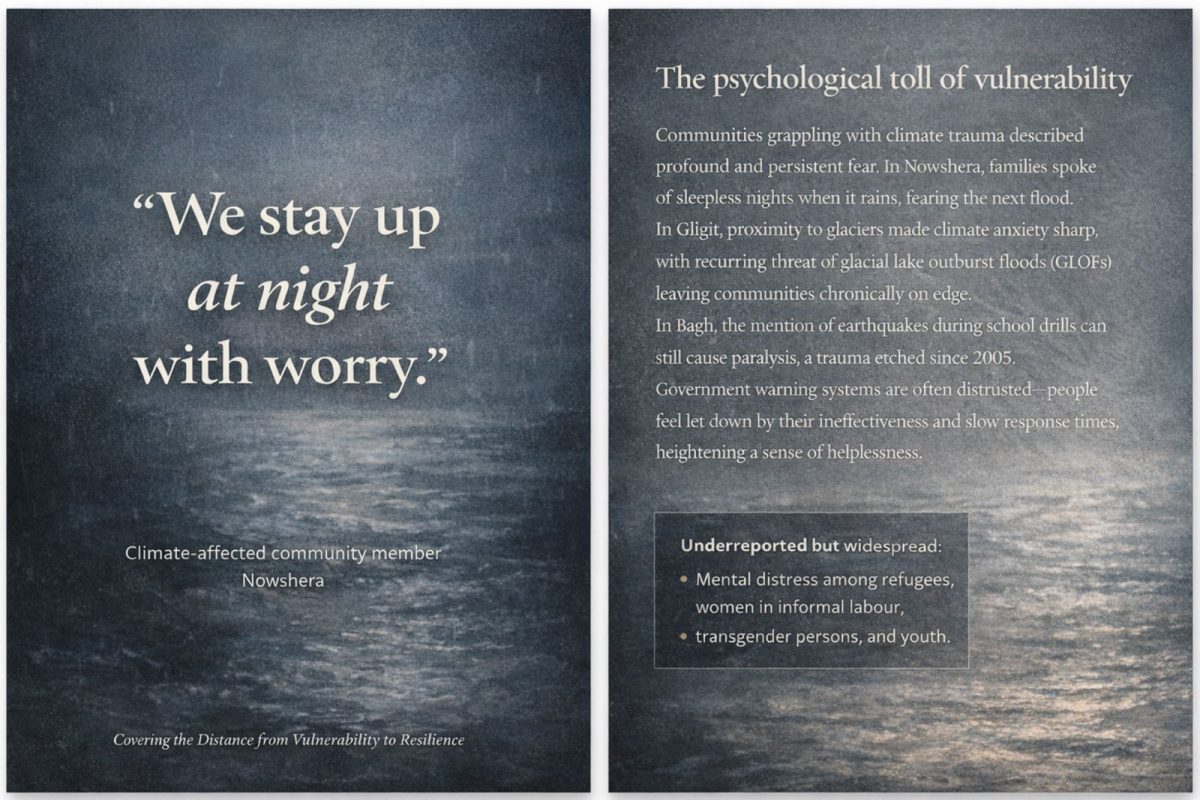
Climate anxiety was palpable among communities in Gilgit-Baltistan, who have experienced GLOFs or are anticipating them. The emotional distress of picking up after the flood is immense: older men feel at a loss to provide for their families as their fields have been wasted, and they have limited employable skills to do alternative work; whereas women reveal hardships of making food last, finding fuel for wood-stoves, and soothing traumatized children who “cry at night from the sound of the river.” Early warning messages never seem to work, and panic and fear spread quickly, particularly when there is no help at hand. In a refugee community outside Nowshera, women explained their climate anxiety, saying “When it rains, we stay up all night worrying as we know we will have to rebuild our [mud] houses in the morning”. For many, the memory of a natural disaster lingers on, and respondents in Bagh are informed that mere mention of an earthquake, as part of school drill or emergency training, will “paralyze some with fear, and cause many to pass out, as the association is that strong.”
Mental and emotional health challenges are particularly acute among transgender persons, who face harassment, abuse and violence on an everyday basis. “Our survival depends on living in a big city, where people are more accepting, despite the challenges. Security has improved, and we share live locations on our smartphones with each other, so nobody is harmed,” explained a transgender activist in Karachi. They felt greater awareness is a result of decades long activism, assisted by social media in recent years, that has led to positive change in mindsets. However, there is persistent ostracization from society, and particularly from families, that create emotional distress within the community. “Sometimes doctors refuse to see us; we cut our hair to fit in school, where children ridicule our younger ones…imagine not being able to meet an ailing relative, or attend a loved one’s funeral, for the shame it would bring to your family. We have homes we cannot return to, and I took pills to deal with my depression,” stated a transgender person.
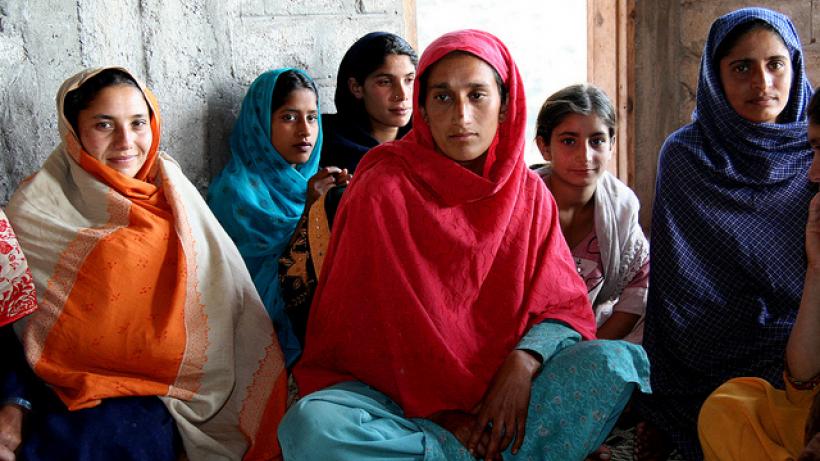
Younger housewives residing in urban slums were the most marginalised group, with extreme mental and emotional health challenges. Living lives of physical and mental abuse, and denied agency or resources, these respondents found it difficult to articulate the extent of their challenges. They agreed that “tension” was rife in each household, and poverty led men to become physically abusive. “Sons learn from their fathers, turn to drugs, and raise hands on their mothers and sisters. The rest of the time, they sit at street corners, and there is no work for them,” explained a respondent. When asked what they do to help each other cope with stress, they explained “nobody wants to reveal they are beset with problems. What will we gain by telling someone? We had been told that when our children grow up, life will get better, but it hasn’t.” In extreme cases, one respondent stated she had gone to a doctor, who prescribed sleeping pills to alleviate stress. Several deprivations come together in urban slums, but the most deprived among the vulnerable are young women denied agency, mobility, and autonomy.