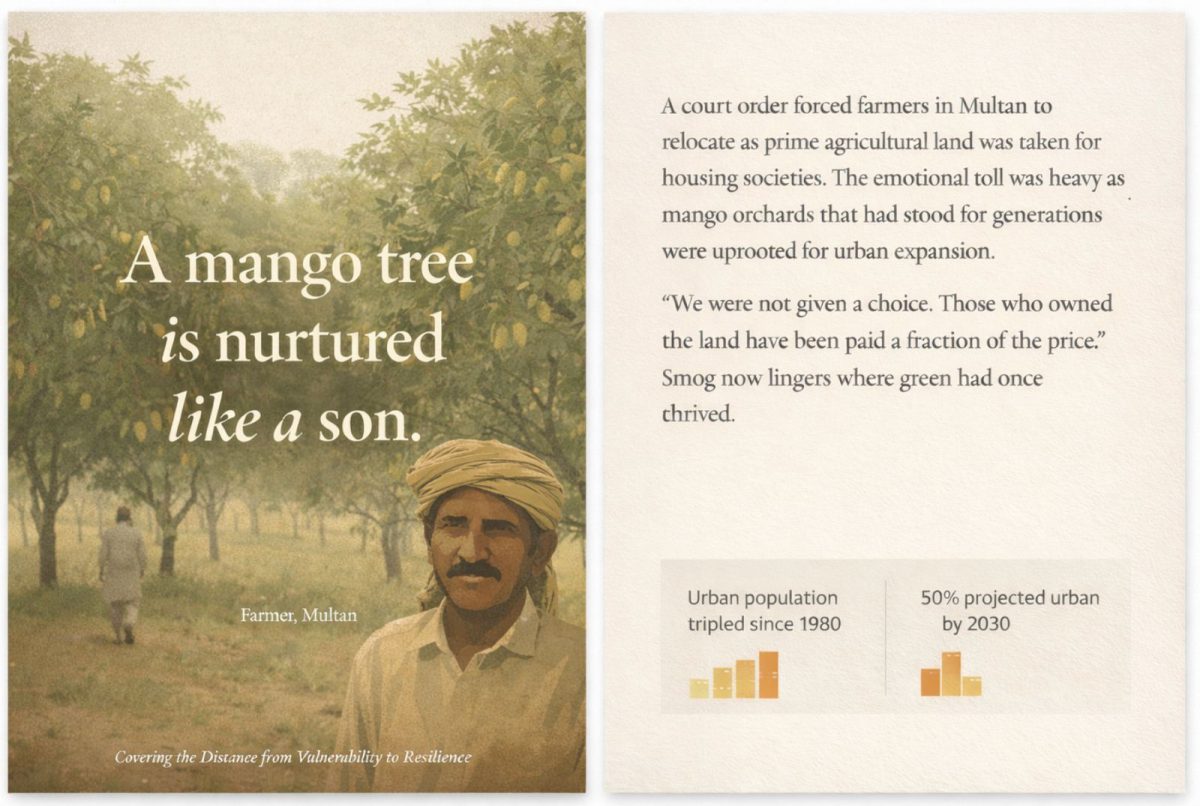
A mango tree is nurtured like a son: Geographies determine vulnerability or resilience
Date: March 12, 2026
There are geographical clusters that demonstrate more resilience as a result of higher investments in social infrastructure and human capital, as well as districts that are collectively underdeveloped. Communities that reside within regions prone to climate-induced disasters experience far greater vulnerability, even if other indicators are positive. This was the case for populations living in Gilgit whose proximity to a glacier 26 miles from their village put them at risk of experiencing a Glacial Lake Outburst Flooding (GLOF) incident. Higher incidence of natural disasters coupled with outdated infrastructure undermines community resilience and efforts to build.
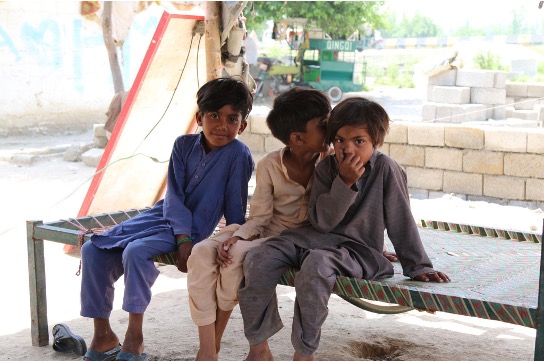
Not all geographies are at risk of natural disasters. Communities living in South Punjab have always relied on agriculture for employment, livelihoods and food security. Recent moves to convert prime farmland into real estate has incurred extreme reactions by community members, who lament the loss of trees and soaring temperatures as a result of deforestation. A strong connection to the land makes communities resilient, they explained, but unwarranted development of housing societies over age-old mango orchards had undermined natural habitats and disrupted livelihoods. “A mango tree is nurtured like a son; to see entire orchards chopped down has been emotionally distressing for us all. Those who lived on the land have been evicted. What new job can one do after growing mango orchards for fifty years?” asked a respondent in Multan. Communities are conscious that new housing societies will not create prosperity for locals despite the promise of several new jobs, and developers will benefit from the profits. “Those of us who owned the land have been paid a fraction of the price. We were not given a choice; a court order was issued saying we have to relocate,” they informed.