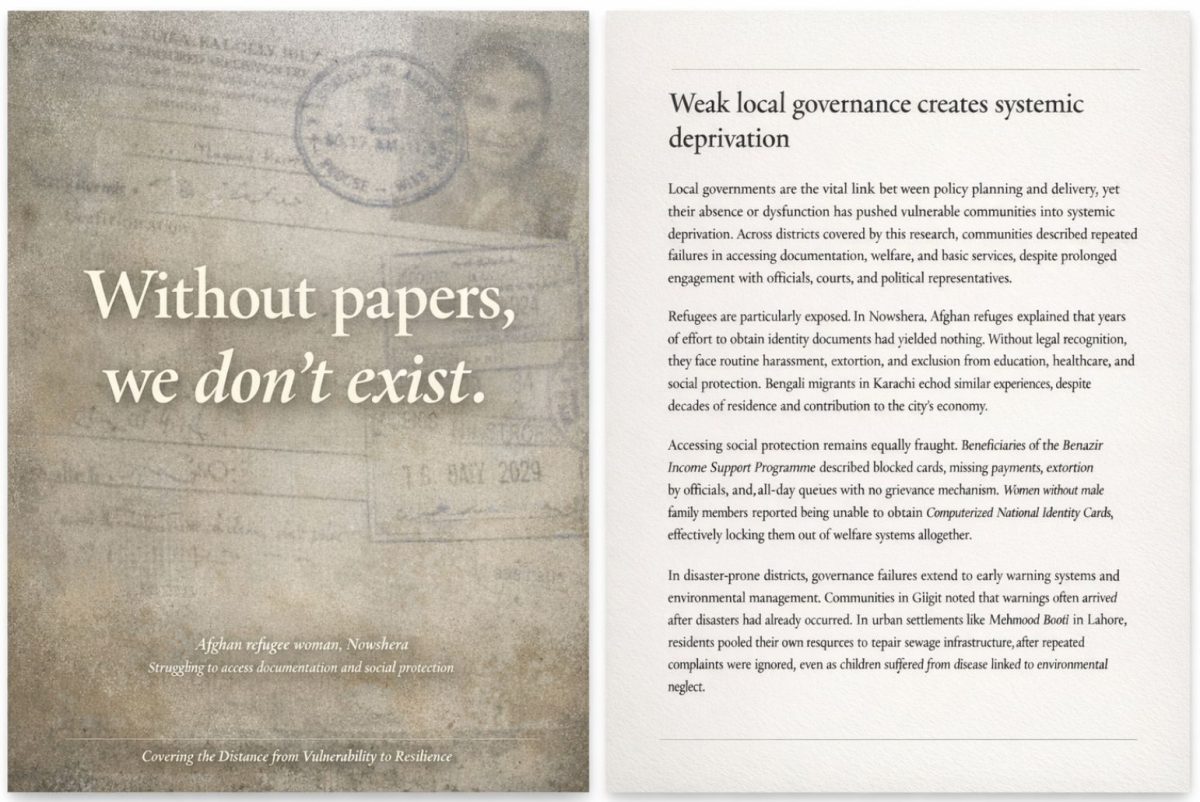
Without papers, we don’t exist: Weak local governance creates systemic deprivation
Date: March 12, 2026
Local governments are the vital link between policy planning and delivery. From developing large infrastructure to waste collection, local governments are meant to provide entitlements that form the backbone of community resilience. Weak local governance contributes to higher vulnerabilities, especially in urban settings where inadequate services intensify deprivation. In Pakistan, the absence of local government structures has created serious voids in service delivery, and pushed communities to extreme marginalization. In expert interviews across Pakistan, policy implementers acknowledged that the lack of localized decision-making had undermined an authentic interface with the public; the mechanisms to solicit community challenges were too few or ineffective, and the system’s responsiveness had little accountability. Communities attempt resolving their problems through petitions, litigation, complaint portals, approaching officials, politicians or NGOs.
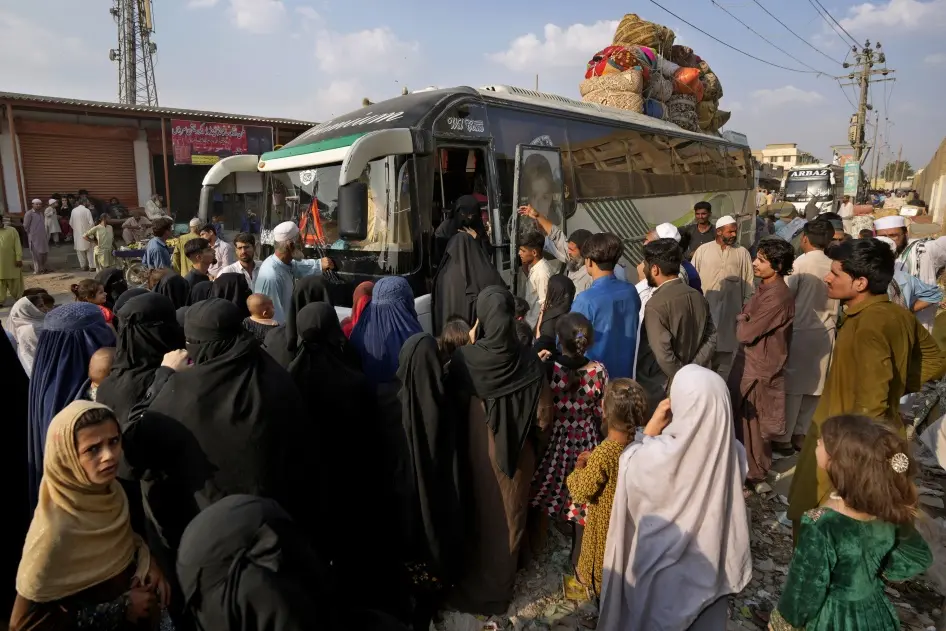
Those in need of legal documentation have suffered a great deal due to systemic ‘blindspots’ and policy ambiguity. Refugees in particular are easy targets for extortion and harassment due to incomplete documentation, despite Constitutional protections for them. “We have been trying to get our national identity cards for years, but no one listens to us. Without papers, we feel like we don’t exist,” stated an Afghan refugee in Nowshera. Bengali migrants in Karachi echoed similar thoughts: “We have lived here for decades, and built this city with our hard work. We have even gone to court, but not obtained basic documentation. Politicians come and give assurances, but nothing happens…there is no system that supports us.”
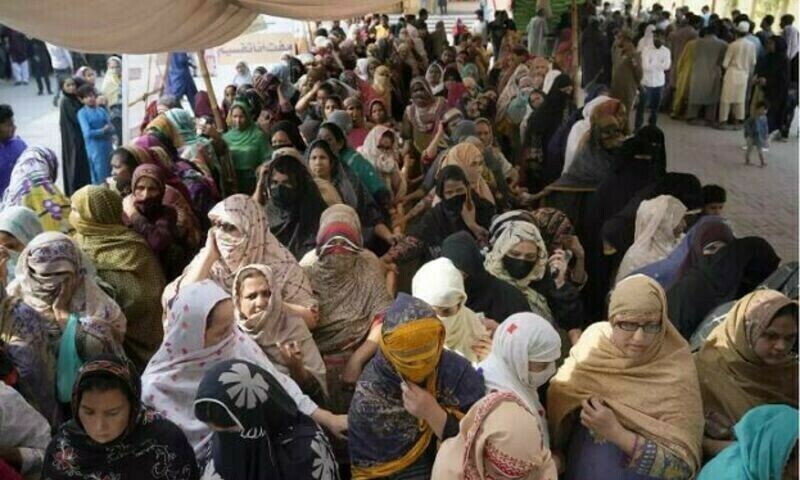
A universal challenge among vulnerable communities is not being able to access social protection funds for BISP. “For two years, our funds have not been given, and there is no reason why,” said a BISP beneficiary in Charsadda. There are several omissions and gaps in digitising records, often haphazardly done by officials with repeated demands for prior documentation and evidence, which vulnerable communities do not have. The most common problems reported were that women without male family members could not get Computerised National Identity Cards; on collection day BISP officials would say ATM machines are dysfunctional, and charge each beneficiary a ‘stipend’ for themselves; the waiting queues last all day, and women faint from exhaustion in line or turn violent; there is nobody to ask or complain to if cards are blocked. In all districts covered by this research, there were routine challenges with NADRA and BISP that vulnerable communities found insurmountable.
In disaster-prone districts, there are obvious deficits in local coordination and overlapping mandates among government agencies. Communities in Gilgit observed about early warning systems: “We don’t receive any early warnings. In fact, many times the warning comes after the disaster has already taken place.” Environmental protection and management is weak in the major cities, and completely missing in peri-urban locations or slums. “Our sewage was broken and leaking underground; it was giving our children bad skin diseases. We complained several times, but nobody paid any heed, so we collected money together over a year to get the pipes fixed. Half the people in our area suffer from chest related ailments because of the poisonous air,” shared women respondents in Mehmood Booti, Lahore.
Deficiencies in basic services undercut the adaptive capacity of communities to withstand shocks, making them more vulnerable to climatic hazards. Moreover, weak governance creates a disconnect between local authorities and the communities they serve, limiting accountability and responsiveness. Residents often lack the channels needed to voice concerns or demand improvements, leading to a cycle of neglect that perpetuates poor living conditions.